

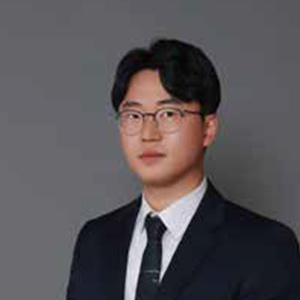
Yoonmok Yang
Yoonmok Yang is a venture capitalist and Investment Associate at DSC Investment, with prior experience at Bain & Company and Hyundai Motor Company. He specializes in AI, venture funding and strategic growth. A KAIST graduate, he actively invests in startups, focusing on emerging technologies and global market expansion.
Through this article, Yang emphasizes the resilience of Korea’s venture capital and startup ecosystem, highlighting the role of government policy funds in sustaining investment and underscoring the shift towards scalable, revenue-generating business models as the key to long-term success.
The Korean venture capital and startup ecosystem has displayed a relatively resilient trajectory, even as global capital markets face persistent headwinds. A key driver of this resilience is a series of government-led policy funds, which have expanded significantly and compensated for the reduction in private capital contributions. Official figures indicate that venture investment size in Korea grew by around 9.5 percent from the previous year, reaching almost 9 billion USD, contrasting sharply with stagnant or marginally negative growth in other major markets. While this uptick underscores the country’s commitment to fostering entrepreneurship, it also reflects the Korean government’s determination to bolster early-stage and growth-stage financing through a more robust policy framework.
“Projections for 2025 suggest that the Korean stock market could increase, fueled by expectations of global interest rate cuts and an ongoing recovery in the semiconductor sector. This would naturally lead to a more favorable environment for companies seeking to go public”
Nevertheless, the overall ecosystem has not been immune to challenges. Early-stage investments—especially in ‘seed to series A rounds’—have declined by nearly 30 percent in terms of deal count and about 25 percent in aggregate deal value. This trend suggests that despite an overall rise in venture investment, newcomers still face considerable hurdles in securing initial funding. Higher interest rates and a global tightening of monetary policy partly explain this dynamic, as risk-averse capital becomes more selective and less tolerant of unproven business models. Yet, industry analysts posit that this contraction in early-stage funding may be cyclical. Interest rates are projected to decrease gradually by 2025, and such changes typically influence fund commitments with a lag of one to one-and-a-half years. Consequently, many expect venture funding to stage a stronger comeback in or around 2026, buoyed by monetary easing and additional government support.
On the startup front, multiple Korean ventures are pursuing growth opportunities overseas, particularly in markets like Japan that offer scale and relative cultural familiarity. Japan’s large consumer base and demand for innovative solutions have turned the country into a prime target for Korean enterprises looking to broaden their revenue streams. This trend effectively counters the slowdown in domestic consumption and provides a strategic hedge against local market saturation. Notably, there is a steady increase in Korean-incorporated entities in Japan and the U.S., a sign that overseas expansion is becoming a mainstream strategy rather than a niche endeavor.
Amid these crosscurrents, the exit environment—particularly the IPO market—shows guarded signs of improvement. Projections for 2025 suggest that the Korean stock market could increase, fueled by expectations of global interest rate cuts and an ongoing recovery in the semiconductor sector. This would naturally lead to a more favorable environment for companies seeking to go public. However, regulatory authorities are simultaneously tightening the requirements for technology-based IPOs, especially those seeking to list through the technology special listing route. Heightened scrutiny over business viability, commercialization potential and revenue generation capacity is expected to shape the listing landscape, signaling that while opportunities may be abundant, the bar for entry is also being raised.
Against this backdrop, AI-centric ventures are emerging as standout investment opportunities. According to recent data, the amount invested in domestic AI startups and smaller-scale enterprises soared by roughly 41 percent compared to the previous year. This momentum has been particularly pronounced within Korea in enterprise software, cybersecurity and healthcare segments, where the integration of AI promises to redefine operational efficiencies, data analytics and patient outcomes. Investors are keenly aware that AI’s transformative potential extends beyond mere technological novelty; it can be the engine of robust revenue generation and operational cost savings, which have become especially critical amid tighter funding conditions. In addition, DSC Investment individually continues to seek opportunities within the core AI infrastructure market, leveraging Korea’s manufacturing heritage. Because AI is inherently horizontal—affecting multiple verticals—this approach emphasizes the infrastructure layer more, as FuriosaAI exemplified.
In addition, large-scale collaborations with global technology giants are further catalyzing interest in Korean AI startups. Government-led initiatives encouraging open innovation and multinational partnerships are allocating more significant budgets to these programs, offering a springboard for domestic startups to integrate leading-edge technologies into their product portfolios. This has attracted local and international venture funds, leading to a vibrant, competitive AI investment scene. Yet, investors are increasingly scrutinizing actual revenue models. In an era of higher borrowing costs and diminished risk tolerance, capital flows to firms that can prove near-term market traction and a credible path to profitability. Gori Company is another representative shipping API firm that combines AI with logistics, having recently secured funding from DSC Investment. The company delivers significant value and demonstrates high market impact by effectively integrating AI with logistics solutions and expanding into global markets with a lucrative business model.
Quick Bytes
Certain areas in Japan offer special startup visas to help foreign entrepreneurs start their companies. And recently, Tokyo has even started offering loans to provide further help. Japan’s robotics and advanced manufacturing sectors are thriving, driven by smart manufacturing initiatives and JETRO’s support, offering tax incentives for factories using automation and smart systems.
Looking ahead, the “so what” for investors and startups alike lies in blending technological innovation with tangible commercial value. While cutting-edge AI solutions remain a hot topic, the spotlight is shifting toward companies that can demonstrate real-world applications and consistent income streams. Sectors such as enterprise services, industrial automation and digital health are especially attractive, given their potential to utilize AI to yield measurable cost reductions or enhance customer experiences. The investment thesis thus evolves from “growth-at-all-costs” to a more balanced consideration of operational sustainability, scalability and cash flow.
Overall, Korea’s venture and startup ecosystem balances headwinds and tailwinds. Government policy funds bolster investment volume, yet early-stage entrepreneurs face tighter screening and more judicious capital deployment. Overseas expansion has emerged as a viable path for growth and the impending recovery of the IPO market is tempered by stricter listing requirements. Meanwhile, AI-driven innovations stand out as a powerful magnet for investment—provided they can generate meaningful revenue. As a result, the overarching narrative emphasizes practicality and returns, pursuing scalable, revenue-generating models that are becoming the linchpin for attracting capital and sustaining growth in an increasingly competitive environment.
